
The talk will take place in the MPA lecture hall on Friday, December 9 2011, at 5:30pm.
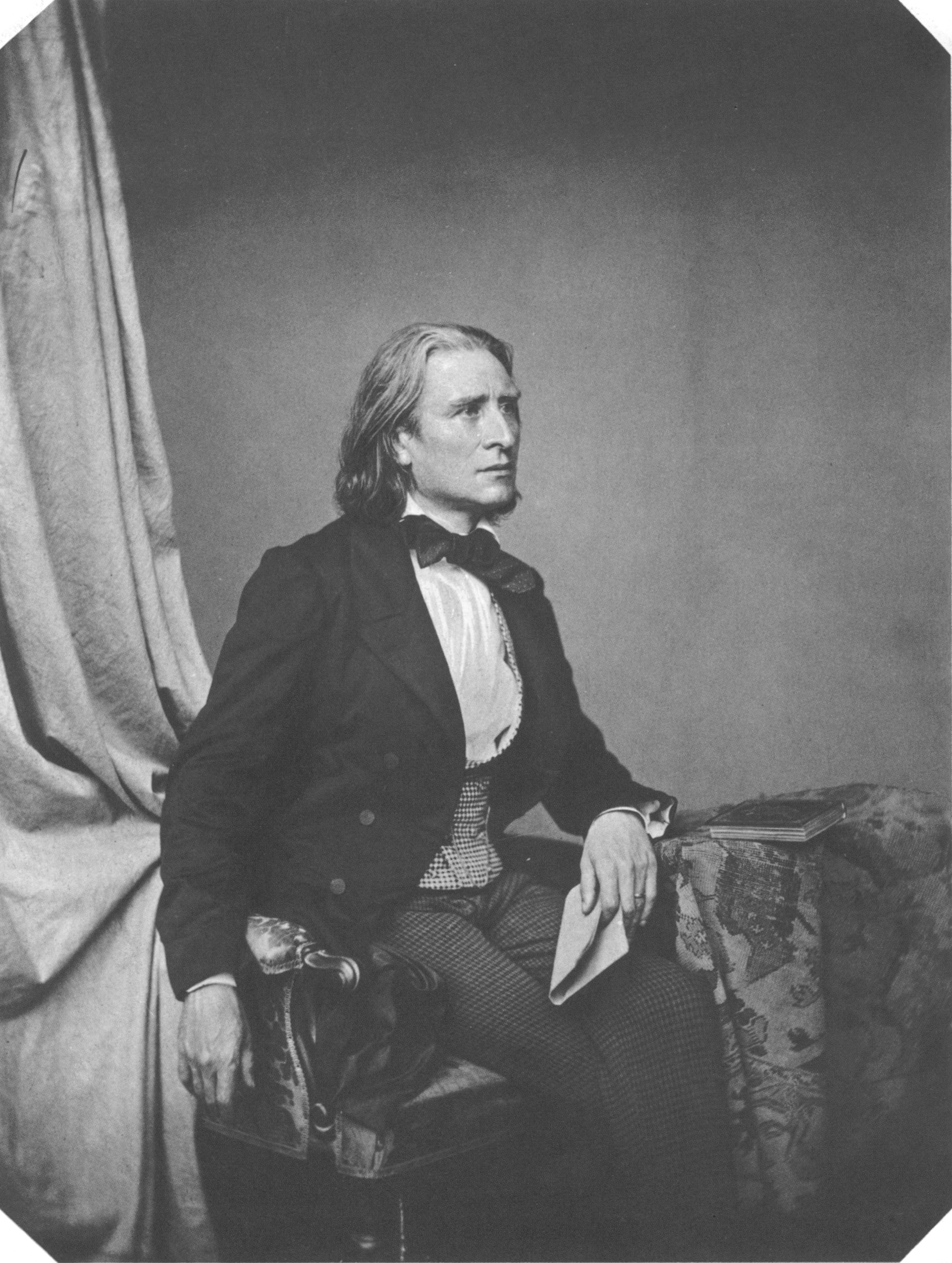 “Franz Liszt - Born to be a Superstar” was the title of the Burgenländische Landesaustellung to celebrate the 200th birthday of Franz Liszt in 2011. Although little is known today, Liszt was a very important pianist and composer in the late 19th century. In my talk, I want to introduce you to the man who can be seen as a predecessor of today's superstars, and his remarkable life. His influence on modern pop culture will be illustrated by some short film clips and music samples.
 What's a beautiful picture? Good eye or an expensive camera? Years of experience or just 1/60 of second? In few slides I introduce different point of view of photography, basic definitions, brief instrumental history, technical details. I will give some tips on which techniques to use to make a good portrait, sports photography or landscape picture. In the end I will show a selection of my best pictures of Munich, Rome, Venice, Paris and Turkey.
 In this talk, we learn that Indian Spices are much more than "curry powder". Indian cuisine varies greatly over the different regions of the subcontinent, and we learn about the origin of popular dishes such as the Naan, Baati, Kurma, Biryani or the famous Chiken Tikka Massala, which, like the Tandoori cuisine, did not originate in India. From starters, to main dishes, to deserts, spices always play an important role. They are not only added for taste, but also for their health benefits, providing vitamins, minerals and anti-oxidants. But the proof of the pudding (or curry) is in the eating: We also get to sample a range of Indian herbs and spices, as well as a spicy lentil paste.
 The violin family (violin, viola, cello and contrabass) of musical instruments are the result of an impressive amount of precise engineering and artistry that gives them a range of volume, pitch, and tone unmatched by any other instrument. In this talk I will discuss the evolution of the violin, from the murky origins of bowed instruments (which exist in many different cultures) all the way up to the present day. I will then focus on the physics of sound production in the modern violin, starting with the mechanics of producing a sound with a bow (a driven harmonic oscillator, with complications), and exploring how the normal modes of resonance (which produce "Chladni patterns") produce the characteristic "violin" sound. I will round out my talk with a discussion (with a live demonstration) of some of the different techniques used in playing a stringed instrument, and discuss how they affect the quality (pitch, timbre and volume) of the sound. Depending on interest and time, some audience members will get a chance to try out some of what they have learned on a real instrument ...
 The story of the discovery of early bronze age Greece as one of the first great cultural centres of Europe has all the elements that make up a good adventure story: ancient legends, tombs, treasure, lost languages, deception, love, hate, and war. Key to this story are the intriguing but tragic lives of heroes such as Henry Schliemann and Michael Ventris, who should personally be credited with extending our knowledge of early European history by nearly a thousand years into the past. In this informal talk, I will attempt to give a brief account of this exciting story.

 There are many interesting stories one can tell about Kenya. From the cradle of humankind, to its “bloody” history and ending with an uncertain future, Kenya's story is one of the most intriguing in East Africa. Originally I had planned to spend a whole year in Kenya studying at Jomo Kenyatta University of Agriculture and Technology (JKUAT) in Juja, 36 km North East of Nairobi. However, due to the violence that erupted during the presidential elections in 2007 I was forced to leave this fascinating country early after just 6 months. Of course, no talk about Kenya would be complete without mentioning the “Big Five”, the animals you need to see when you are making a safari.
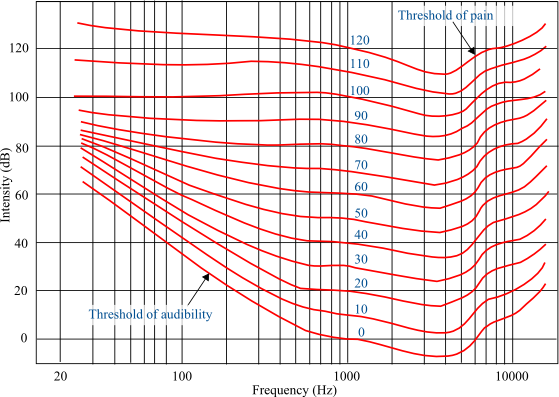 Hearing is one the most important senses. Unlike light, sound enables us to localize objects and dangers (like a fierce tiger or an approaching car) from all directions. But how exactly does it happen that we can tell that we heard something from in front, from behind, from above or from below? How sensitive is our ear? Sound can also be a source of pleasure! We all appreciate a good conversation with friends or listening to music. The above mentioned issues and many more (i.e. sound illusions) will be discussed in this seminar.
  Frogs are truly fascinating animals and have been an interest of mine since the early eighties. After a short introduction to basic characteristics, classification, and habitat of frogs the talk will focus on the more bizarre facts that specific species of frogs exhibit. After covering extremes such as flying frogs, frogs smaller than a dime, larger than a chicken or deadlier than a rattlesnake, we transition to some of the more interesting aspects related to the reproduction and brood care of frogs. Marsupial frogs, feeder eggs, and tadpoles living off the stomach lining of the mother will become familiar concepts. Finally, of course no talk about frogs would be complete without the most famous frog of them all --- KERMIT.